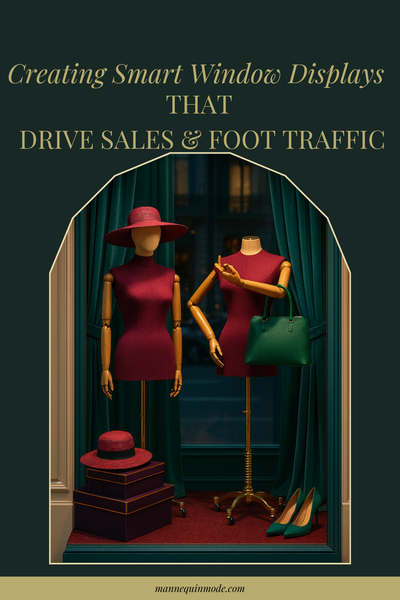
Creating Smart Window Displays That Drive Sales & Foot Traffic
Mannequin Mode on 25th Feb 2026
A great window display doesn’t just decorate your storefront—it sells for you before a customer even steps inside. In a world where shoppers make snap decisions in seconds, your windows act as your brand’s handshake, your silent salesperson, and your most valuable piece of real estate. When designed strategically, they can stop passersby in their tracks, spark curiosity, and convert casual foot traffic into paying customers.
Below is a guide to creating smart, high‑impact window displays that work harder for your business.
- Start With a Clear Story
Every strong window display begins with a narrative. Shoppers should instantly understand what you’re showcasing and why it matters.
Ask yourself:
- What emotion do I want to evoke
- What problem am I solving
- What product or category deserves the spotlight
Whether it’s “Spring Refresh,” “Holiday Glam,” or “Back‑to‑School Essentials,” a cohesive theme helps customers connect the dots quickly.
- Use Mannequins to Bring the Story to Life
Mannequins are the anchor of most successful window displays because they humanize your product and help shoppers visualize themselves wearing or using it.
Smart mannequin strategies:
- Choose poses that feel natural and dynamic
- Use inclusive forms—plus-size, athletic, abstract, or realistic—to reflect your customer base
- Style mannequins with intention: accessories, layering, and color coordination matter
- Keep outfits seasonally relevant and trend‑aligned
A well‑styled mannequin can increase perceived value and inspire impulse purchases.
- Create a Strong Focal Point
Your display should guide the eye. Without a focal point, shoppers don’t know where to look—and they keep walking.
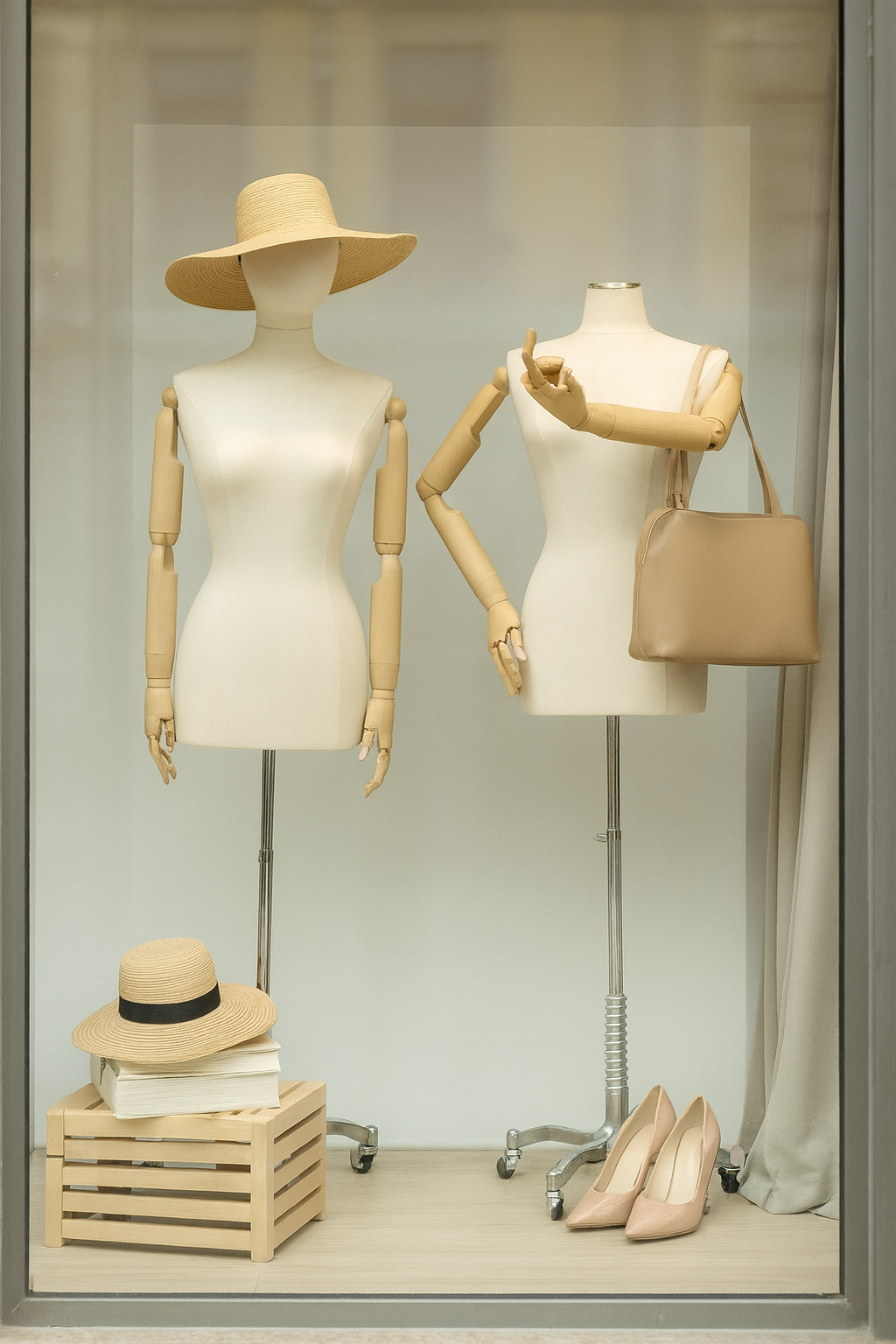
Effective focal points include:
- A hero mannequin
- A bold color pop
- A featured product on a pedestal
- A dramatic prop or backdrop
Place your focal point at eye level and build the rest of the display around it.
- Use Lighting to Add Drama and Depth
Lighting is one of the most overlooked tools in visual merchandising, yet it has the power to transform a simple display into a showstopper.
Try:
- Spotlights to highlight key products
- Warm lighting for cozy, lifestyle themes
- Cool lighting for modern or tech‑driven displays
- Backlighting to create silhouettes and dimension
Good lighting doesn’t just illuminate—it elevates.
- Keep It Clean, Minimal, and Easy to Understand
Clutter kills conversion. Shoppers should understand your message within three seconds.
Keep in mind:
- Less product = more impact
- Clean lines and open space feel premium
- Props should support the story, not distract from it
A simple, well‑edited display often outperforms a busy one.
- Refresh Your Windows Regularly
Stale windows signal stale inventory. Even small updates can make your storefront feel alive and current.
Refresh ideas:
- Swap accessories or color palettes
- Change mannequin poses
- Update signage or seasonal messaging
- Rotate featured products weekly or bi‑weekly
Consistency builds trust—and repeat foot traffic.
- Use Signage That Sells
Signage should be clear, concise, and conversion‑driven.
Best practices:
- Use short, bold headlines
- Highlight promotions or new arrivals
- Keep fonts readable from a distance
- Align colors with your brand palette
Think of signage as your window’s “call to action.”
- Incorporate Height, Layers, and Depth
Flat displays fall flat. Smart layering creates visual interest and encourages shoppers to pause.
Try mixing:
- Tall and short props
- Mannequins at different heights
- Layered backdrops
- Platforms, risers, or crates
Depth makes your display feel immersive and intentional.
- Make It Instagrammable
A window that photographs well becomes free marketing.
To boost shareability:
- Use bold colors or patterns
- Add a unique prop or statement piece
- Keep reflections minimal with strategic lighting
- Include your handle or hashtag subtly
If customers stop to take a photo, they’re more likely to step inside.
- Track What Works
Smart window displays aren’t just creative—they’re strategic.
Measure success by:
- Foot traffic increases
- Sales of featured products
- Customer comments or questions
- Social media engagement
Use this data to refine your approach and build displays that consistently convert.
Final Thoughts
A smart window display blends creativity with strategy. It tells a story, highlights your best products, and invites shoppers into your world. With thoughtful styling, strong focal points, and intentional lighting, your windows can become one of your most powerful sales tools.