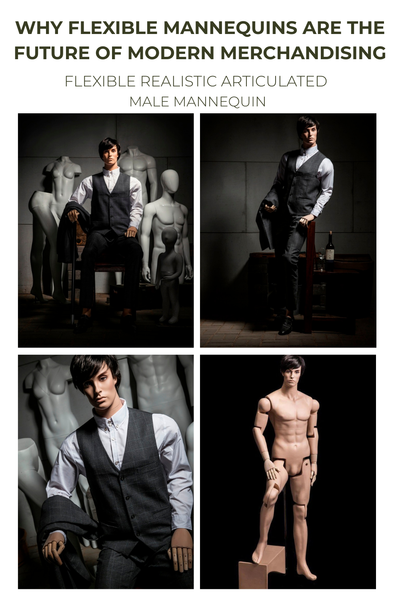
Why Flexible Mannequins Are the Future of Modern Merchandising
Mannequin Mode on 26th Feb 2026
What Flexible Mannequins Are
Flexible mannequins are articulated or bendable forms that allow retailers to pose mannequins in dynamic, lifelike positions. Unlike rigid fiberglass mannequins, they can bend at the elbows, knees, waist, and sometimes even fingers—making them ideal for storytelling, movement, and high‑impact displays.
They’re increasingly used in modern merchandising because they adapt quickly to seasonal themes, product changes, and small‑space layouts. This aligns with broader retail trends toward dynamic, brand‑driven displays that feel more human and expressive.
Why Flexible Mannequins Matter for Retailers
Flexible mannequins solve several merchandising challenges at once:
- Dynamic storytelling — They can sit, lean, stretch, or interact with props, creating editorial‑style displays that feel alive.
- Small‑space adaptability — They fit into tight windows, shelves, risers, and pop‑ups without requiring full standing height.
- Inclusive representation — Many flexible forms come in diverse sizes and body types, supporting modern expectations for representation.
- Fast styling — They’re easier to dress than rigid mannequins, making them ideal for boutiques with lean teams.
- Seasonal versatility — One mannequin can shift from activewear to denim to outerwear simply by changing the pose.
These benefits echo broader merchandising insights that mannequins are evolving from static props into brand storytellers, helping retailers connect with modern shoppers.
How to Style Flexible Mannequins for Maximum Impact
Flexible mannequins shine when you treat them like characters in your display story.
1. Use Movement to Guide the Eye
A bent knee, a turned torso, or a reaching arm creates directional flow—pulling shoppers deeper into the display.
2. Create Interaction
Pose two mannequins as if they’re engaging with each other or with a prop (a handbag, a surfboard, a stack of sweaters). This creates emotional connection and increases dwell time.
3. Highlight Key Products
Use seated or crouched poses to bring attention to shoes, accessories, or lower‑shelf items that often get overlooked.
4. Keep the Silhouette Clean
Even with flexible forms, clean garment lines matter. Use pins, clips, and tucking techniques to maintain a polished look—an approach widely recommended in professional styling guides.
5. Match the Pose to the Category
- Activewear: lunges, stretches, mid‑stride
- Denim: casual leaning, seated poses
- Swimwear: relaxed, beach‑inspired lounging
- Luxury: soft, elegant gestures with minimal bend
Display Ideas for Different Retail Categories
These concepts help boutiques and creators build scroll‑stopping content and high‑conversion displays.
- Athleisure: A mannequin tying a shoelace or stretching creates instant lifestyle context.
- Swimwear: A seated or reclining pose evokes resort energy without needing large props.
- Kidswear: Playful, dynamic poses mimic real movement and delight parents.
- Outerwear: A mannequin adjusting a collar or holding a bag adds sophistication.
- Accessories: Use hand articulation to showcase jewelry, scarves, or handbags.